
If you own, rent, sell, or plan to buy a home in Ireland, the Residential Building Energy Rating (BER) is one of the most important documents you need to understand. A Domestic BER certificate shows how energy-efficient a home is and provides guidance on how to improve its performance. It also plays a key role in property sales, rentals, and energy upgrades.
This guide explains everything homeowners and landlords need to know about residential BER in Ireland.

What is a Domestic BER?
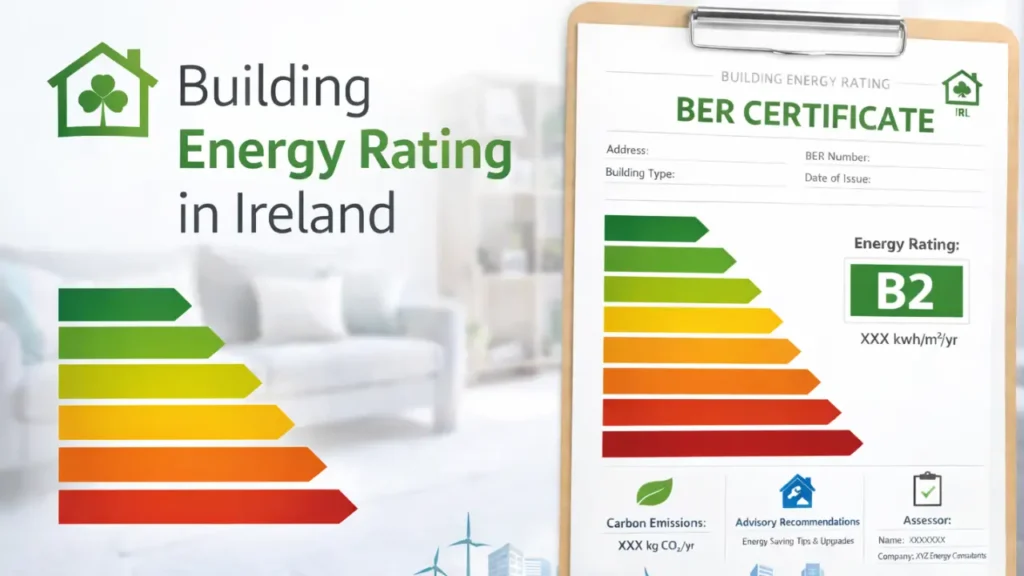
A Domestic BER certificate measures the energy efficiency of homes and apartments in Ireland. It rates properties from:
A1 (most efficient) to G (least efficient)
Higher-rated homes:
- Cost less to heat and run
- Are more comfortable
- Produce fewer carbon emissions
- Are more attractive to buyers and tenants
Lower-rated homes typically require more energy and higher running costs.
When Do You Need a Domestic BER Certificate?
You must have a valid Domestic BER certificate when:
- Selling your home
- Renting or leasing a property
- Building a new home
- Applying for certain SEAI grants
BER details must be included in property advertisements and shared with buyers or tenants.
Benefits of Domestic BER Rating
Lower Energy Bills
Energy-efficient homes require less heating and electricity, reducing monthly costs.
Increased Property Value
Homes with higher BER ratings are more attractive to buyers and can achieve higher sale prices.
Better Comfort
Improved insulation and heating systems create warmer, healthier living spaces.
Access to Grants
Many SEAI home energy grants require BER assessments before and after upgrades.
Environmental Impact
Improving your BER reduces carbon emissions and supports Ireland’s climate targets.
Domestic BER is Calculation
A certified BER assessor evaluates your home using the DEAP methodology.
Key factors assessed include:
- Attic, wall, and floor insulation
- Heating system efficiency
- Windows and doors
- Ventilation
- Hot water systems
- Renewable energy (solar panels, heat pumps)
- Lighting
This information is entered into SEAI software to generate the BER rating and advisory report.
Domestic BER Advisory Report?
Every residential BER includes an Advisory Report with recommended improvements such as:
- Upgrading insulation
- Installing efficient boilers or heat pumps
- Adding solar panels
- Improving ventilation
- Switching to LED lighting
Following these recommendations can improve your BER rating and reduce energy costs.
How Long Does a Domestic BER Last?
A residential BER certificate is valid for 10 years, unless major upgrades or changes are made to the home.
If your certificate has expired and you plan to sell or rent, you must obtain a new BER.
How to Improve Your Home’s BER
Improving your BER does not always require major renovations. Simple upgrades can include:
- Attic and wall insulation
- Heating system upgrades
- Smart heating controls
- Solar PV installation
- Draught proofing
- Energy-efficient lighting
A BER assessor can advise on the most cost-effective improvements for your home.

Why Choose a Professional BER Assessor?
Working with an experienced BER assessor ensures:
- Accurate and compliant certification
- Expert advice on improvements
- Guidance on SEAI grants
- Increased property value and efficiency
FAQs
What is domestic BER?
A domestic BER (Building Energy Rating) measures the energy efficiency of residential properties, such as homes and apartments. It shows how well a home performs in terms of energy usage, heating, and insulation, helping you understand energy costs and the home’s environmental impact.
How do I know my house’s BER?
To find out your home’s BER, you need a BER assessment from a registered BER assessor. The assessor will evaluate the property’s energy efficiency, and then you’ll receive a BER certificate with your rating.
Is a C2 BER rating good for a house?
A C2 BER rating is considered below average in Ireland. Homes with a C2 rating tend to have higher energy consumption and may require improvements such as better, more efficient heating systems to reduce running costs and improve comfort.
Can I check my credit rating for free?
You can check your credit rating for free through various online services, including the Irish Credit Bureau or through MyCreditRatings.ie. These services allow you to see your credit report and score at no charge, once a year.
How much does a Domestic BER assessment cost?
The cost of a BER assessment can vary based on the size and type of the property. Typically, it can range from €150 to €300, depending on the assessor and the specific property.
What does BER exempt mean for domestic?
A BER exemption means that certain properties, such as newly constructed homes, properties with very low energy demand, or listed buildings, may not need a BER certificate. However, most residential properties are required to have one when selling, renting, or applying for grants.
Can you sell a house without a BER rating?
No, selling a house without a BER rating is not allowed in Ireland. It’s a legal requirement to have a valid BER certificate when selling or renting a property, and it must be included in property advertisements.
How does BER affect mortgages?
The BER rating can influence mortgage rates, as banks and lenders may offer better terms or rates for homes with higher energy ratings. This is because more energy-efficient homes typically have lower running costs, making them a less risky investment.
Does every house have a BER rating?
Most homes in Ireland require a BER rating, especially when being sold or rented. Some exemptions may apply, like for certain new builds or historic properties, but the general rule is that the BER certificate is mandatory.
What does it mean if a house is BER exempt?
If a house is BER exempt, it means the property does not require an energy rating certificate, typically due to specific legal exemptions. However, this is not common for most residential properties.
Is D1 a good BER rating?
A D1 rating is below average. Homes with a D1 rating have higher energy consumption, meaning they are less energy-efficient. Improvements to insulation, heating systems, or energy-saving technologies can help improve this rating.
What is an acceptable BER rating?
An acceptable BER rating would generally be C1 or higher. A C1 rating indicates good energy efficiency, and homes in this range are typically cheaper to run and more comfortable than those with lower ratings.
Is a B3 BER rating good?
A B3 rating is above average but still leaves room for improvement. Homes rated B3 are relatively energy-efficient, but upgrades to insulation, heating, or renewable energy sources could further improve efficiency and lower operating costs.
Book Your Residential BER Assessment
If you are selling, renting, upgrading, or simply want to reduce energy bills, a residential BER assessment is essential.
A professional BER assessment helps you:
- Stay compliant with Irish regulations
- Improve energy efficiency
- Increase property value
- Reduce running costs
Contact BES Consultants today to arrange your residential BER assessment and take the first step toward a more energy-efficient home.